
-First Reading: Exodus 17: 3- 7.
-Second Reading: Romans 5:1-2, 5-8.
-Gospel: John 4:5-42.
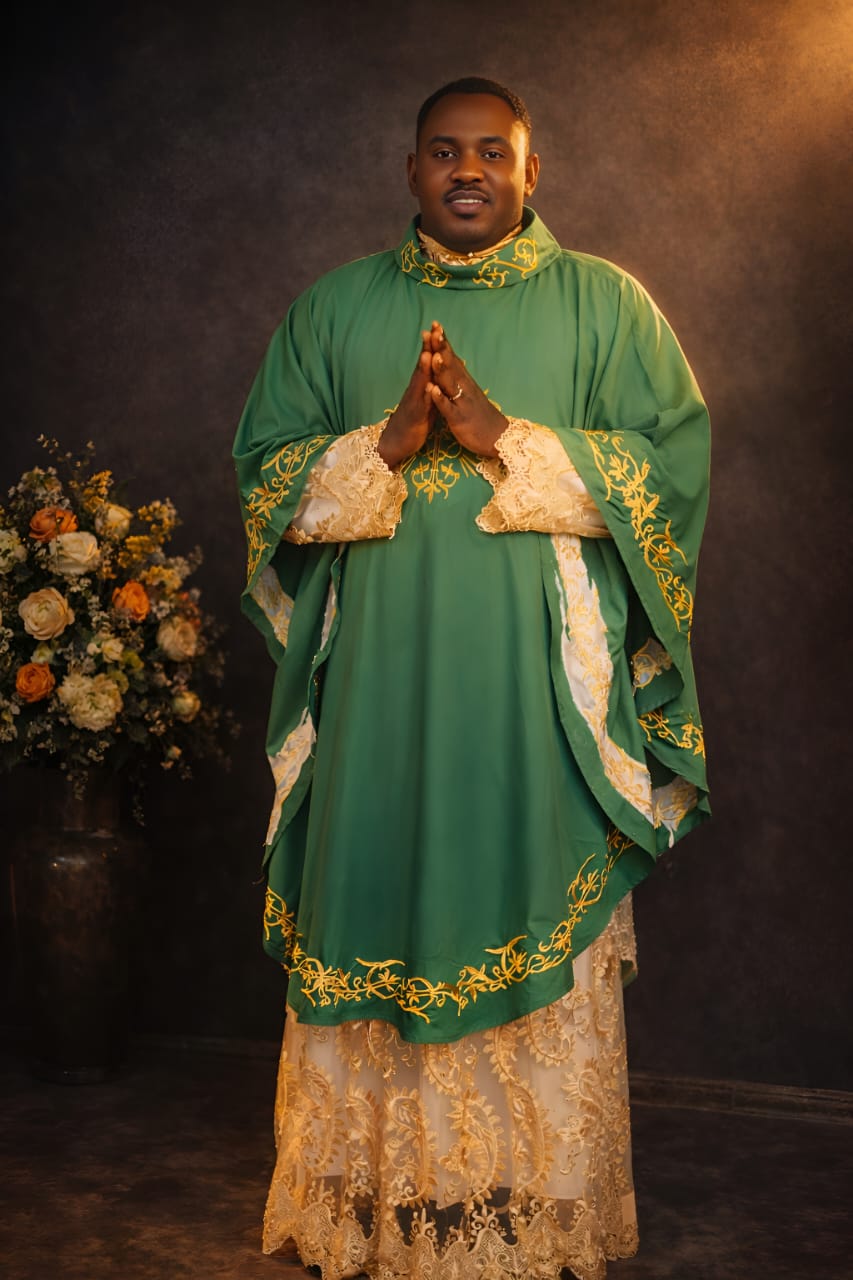
By Rev. Fr. Emmanuel Chukwuebuka Ozorgwu.
THEME
A Spring Of Water Welling Up To Eternal Life.
❖We have all experienced thirst. We all know what happens to our fields when it doesn't rain. In places where people have experienced drought, the entire area dries up and cracks are formed on the ground. Sometimes it lasts for months or even years. It comes under the category of natural disaster owing to changes in climate and global warming.
NB The most drought prone countries in the world – Ethiopia, Sudan, Eritrea, Afghanistan, China, Pakistan, Iran, Somalia, Uganda and Morocco.
❖Water is an essential requirement for the sustenance of all lives. According to scientific studies, water makes up 60-75 percent of the total body fluid. Hence, complete withdrawal or water extraction from any person will result in death.
❖Drinking plenty water create saliva; regulate body temperature; protect tissues, spinal cord and joints; excrete waste through perspiration, urination and defecation; maximize physical performance; prevent constipation; aids in digestion; helps in nutrient absorption; helps you lose weight; improves blood oxygen circulation; helps fight off illness; helps boost energy; aid in cognitive function; helps improve mood; helps keep skin bright and prevents overall dehydration.
❖The first reading and the Gospel speak to us of water.
❖In the desert the people of Israel survived because God provided water for them.
❖The story shows God's graciousness to Israel.
❖Tormented by thirst, the people complained against Moses; “Why did you bring us up out of Egypt, to kill us and our children and our cattle with thirst?”
❖This may be understood simply as a quarrel with Moses and a demand that he meets the needs of the people.
❖Moses appealed to the Lord. He got a positive answer from God to strike the rock with his staff. The answer is different from the one he got in Numbers 20:1-13 in the wilderness of Zin. When the people complained, Moses and Aaron were asked to speak to the rock for water to gush out, rather, they strike it after having given the people a tongue - lashing.
❖In Exodus 15:22-27, the first complaint of the people about water after walking for three days without finding water. When they reached Marah, they found water but could not drink it because it was bitter. Moses then cried out to God who showed him a piece of wood, and when he threw it in the water, the water became sweet.
❖Water is the source of life, but also of destruction. We have the story of the Flood, which brought salvation to Noah and his family, but death to a sinful world; the crossing of the Red Sea, which meant life and liberty to the Israelites, but death to the army of the Pharaoh; and the water from the rock for the Israelites in the dryness desert.
❖The Gospel is about the conversation of Jesus with the Samaritan woman at the well. Jesus speaks of a new water, a new life that he wants to give to us.
❖The Samaritan woman is very surprised at his approach, but her surprise allows Jesus to turn the tables and offer her living water. She, understanding him literally, asks how he can give it as he has no bucket. But the water that Jesus will give is different. Those who drink it will never be thirsty again, and it gives eternal life. Again, literally, the woman wants this water that lasts forever. Then she will never have to trudge to the well again.
LESSONS
❖1) Jesus As The Breaker- Down Of Barriers.
❖The quarrel between the Jews and the Samaritans was an old story. Way back about 720BC, the Assyrians had invaded the northern kingdom of Samaria and had captured and subjugated it. They transported practically the whole population to Media (2Kings 17:6). In verse 24, the Assyrians brought other people from Babylon to occupy the country of Samaria and resided in its cities. Some who were not taken captive began to intermarry with the foreigners; and thereby committed what to the Jews an unforgivable crime. They lost their racial purity. Lost their right to be called Jews at all.
In the course of time, a similar invasion and a similar defeat happened to the southern kingdom, whose capital was Jerusalem. Its inhabitants also were carried off to Babylon, they did not lose their identity, they remained stubbornly and unalterably Jewish.
In the time of Ezra and Nehemiah, the Exiles returned to Jerusalem by the grace of the Persian king. Their immediate task was to repair and rebuild the shattered temple. The Samaritans came and offered their help in this sacred task. They were contemptuously told that their help was not needed. They had lost their Jewish heritage and had no right to share in rebuilding the house of God. It was about 450BC when that quarrel took place, and it was as bitter as ever in the days of Jesus. It was a small wonder that the Samaritan woman was astonished that Jesus, a Jew, should speak to her Samaritan.
❖But there was another way in which Jesus was taking down the barriers. The Samaritan was a woman. Strict Rabbis forbade a Rabbi to greet a woman in public. A Rabbi might not even speak to his own wife or daughter or sister in public. For a Rabbi to be seen speaking to a woman in public was the end of his reputation, and yet Jesus spoke to this woman. Not only was she a woman, but she was also a woman of notorious character. No decent man, let alone a Rabbi, would have been seen in her company, or even exchanging a word with her and yet Jesus spoke to her.
❖2) Jesus Is The Living Water.
❖Jesus explains to the woman that he is not talking about physical water to quench physical thirst. He is talking about spiritual water to quench spiritual thirst. Pointing to the well, Jesus says: “Whoever drinks this water will get thirsty again, but whoever drinks the water I will give him will never be thirsty again.” Jesus is the living water which quenches our thirst. If we are connected to the Living Water, we shall have a better and more convincing witness without getting weary. In Isaiah 55:1, “Everyone who is thirsty should come to the waters and freely drink.”
❖3) True Worshipers.
❖Jesus had told the Samaritan woman that the respective merits of Mount Gerizim and Mount Zion would be irrelevant, that those who truly sought God would find him anywhere. True worship will be done in Spirit and in truth. There will be no more temples. It is not places which are holy, but the people who use them. It is we who are the Temple of God and the dwelling place of Christ.
CONCLUSION
❖Jesus, and Jesus alone can satisfy the thirst in our hearts. Jesus, and Jesus alone, can fill the void in our lives. He has come to fill the God-hole in each of us. He has come to calm the restlessness in our hearts. He has come to satisfy the thirst we feel.
❖Happy Sunday.
❖Have A Nice Day.
❖Blessings.
Lord, please have mercy, don’t look my ugliness and my disease but please I’m begging you to grant me one true hearth, a little, very simple, very very small but true and calm, free from what can slave, from selfishness, from every lies, from what can make other or myself afraid, from what not respect other or myself. Please Holy and True Lord, have a look on my request, praying You to heal me to have a little true hearth who can be grateful, trustful, and specially full of true living love for Who You Are. Only if You Want this, True Lord, it will happen as You Want. Help me to welcome Your Holy Will, with humility. I Love You Holy Lord, all the glory belong to You. Have mercy of your creature and servant. Thank You True Lord for what You have done and allow in my life, please convert me into Your True and Deeply Love.
Reply